
The ‘Suffering’ Equation
Visual art sans the suffering equals stress-relieving joy.

As you know, dear readers, I regularly peruse artists’ perspectives on YouTube and webinars as part of my art education.
While I was on YouTube recently, the featured artist focused on art being good for one’s mental health, which I wholeheartedly agree with. I believe that wherever one falls on the artistic spectrum – beginner to experienced, hobbyist to professional – this craft is essential to one’s mental health.
The YouTuber then addressed that others may still suffer through the creation process – such as being stuck on a technique, having difficulty with an effect they are trying to achieve, and/or making mistakes.
The video’s comments, all written by fellow artists, often agreed that art is good for their mental health. But what struck me was that many other artists conveyed that they suffer greatly throughout the creation process – because of their mistakes and difficulty achieving a desired effect on their oil paintings.
The artists who claimed that art was something they suffered through were speaking a foreign language to me. I can understand an artist who is literally starving to be suffering, but I don’t understand why the process of creating art itself can cause such a condition.
As I’ve indicated in prior essays, the process is everything to me. I find great joy while creating art, even if a piece of art is problematic.
I don’t suffer when I create; in fact, painting and sketching relieve my suffering. When I am anguished, I turn to art, and I find that the very act of creating alleviates stress. And despite making mistakes or struggling with certain aspects of a painting, I still feel joy, not frustration, because I am doing what fulfills me. When I make mistakes or feel that a part of the art piece is challenging, I have faith that the problems will eventually work themselves out. Or they won’t, and that’s fine, too.
Years ago, I used to suffer in my art classes and workshops because of my stubborn perfectionism. It took years to rid myself of the perfection albatross. I realized that the idea of perfection was a harmful construct. And that’s when I became open to what art had to teach me. I learned to make serious attempts at art, but not to take myself too seriously.
I firmly believe that a person can be an artist and not suffer. This does not mean that I am a better artist than those who suffer through the act of creation. I’m hoping that artists who suffer deeply can see what art is – fun, joyful, and freedom from stress.
After all, if creating art causes suffering, why do it at all?
This Week’s Art
I decided to create a new oil painting draft from a reference photo, as well as make revisions to two paintings.
The new oil painting draft is the type of work I typically shy away from – a night street scene with a car and stoplights:
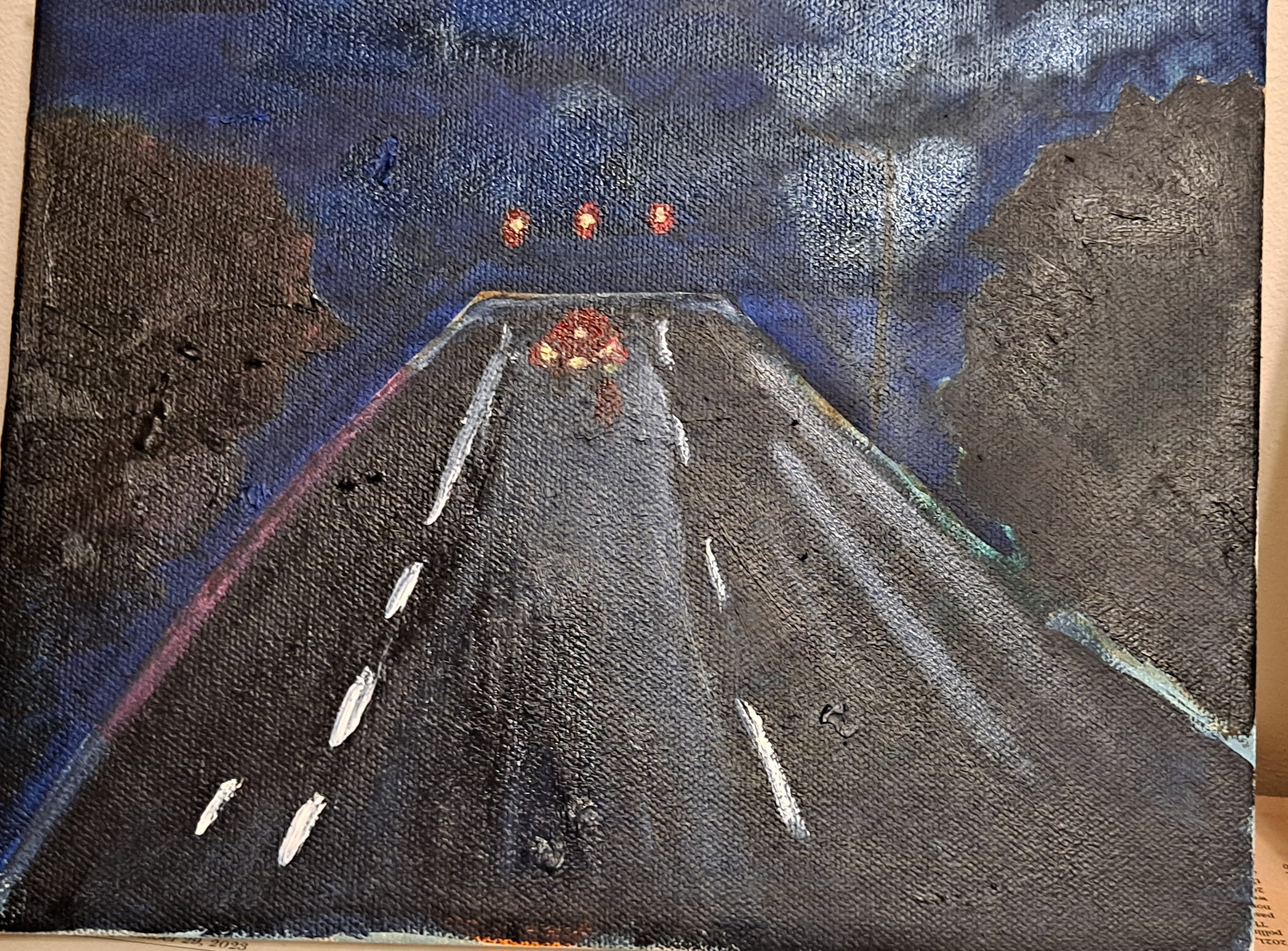
I like the way the sky looks – thank you Prussian Blue. The stoplights turned out fine, but the car looks like it came from outer space; I’m not sure I can fix that, or even want to. In the reference photo, there’s a street lamp, and its light is so prominent that it looks like the moon, which would be a cool element, I think, so I’m eventually adding a moon instead of a street lamp. I’m enjoying the challenge of a night streetscape.
The next two are revisions:
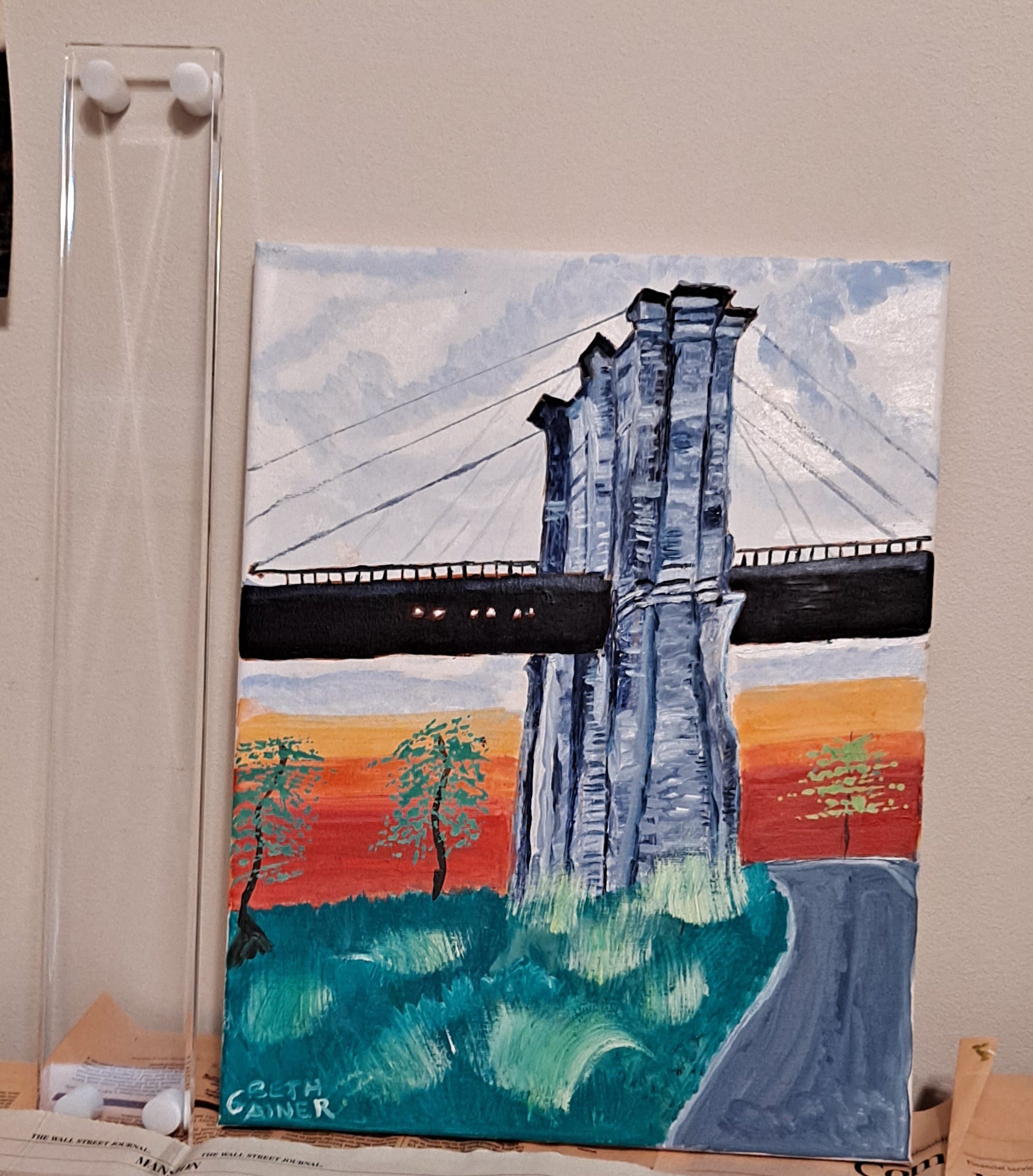
Remember my oil painting Bridging the Divide? Arielle told me that the original brown decking didn’t work well:
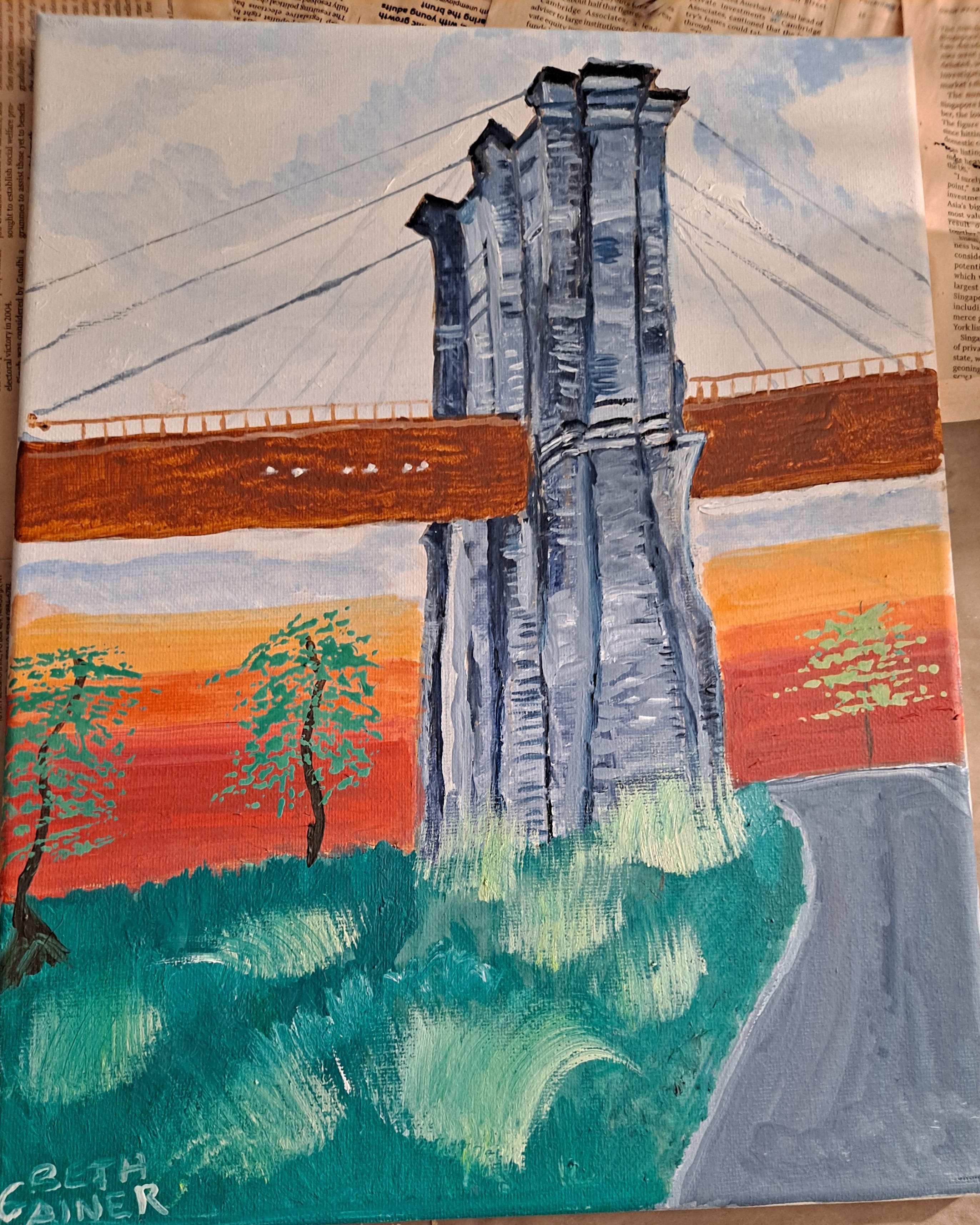
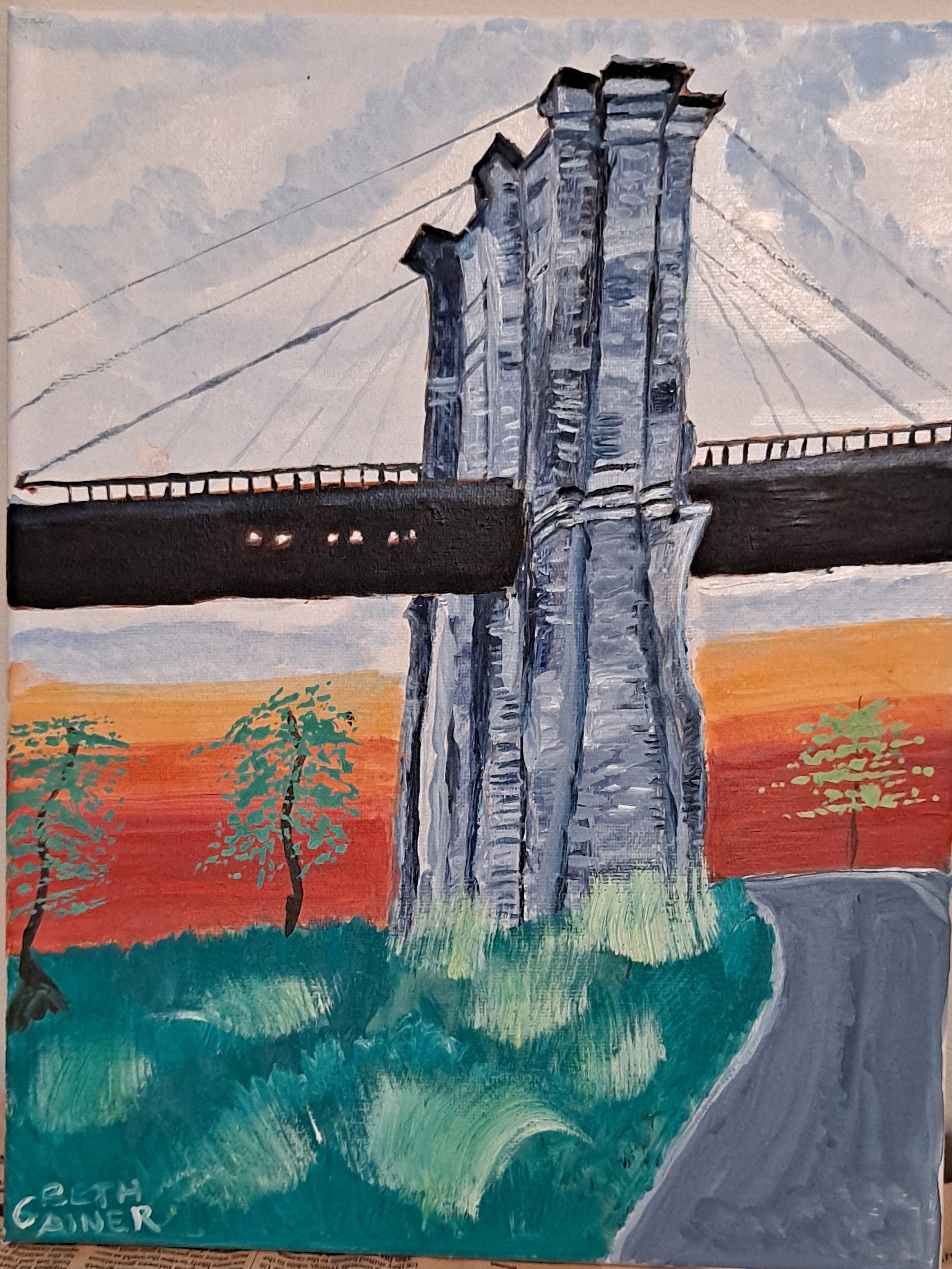
At first, I disagreed with her, which, when it comes to art, I should know better. So I revised it to create the following final painting:
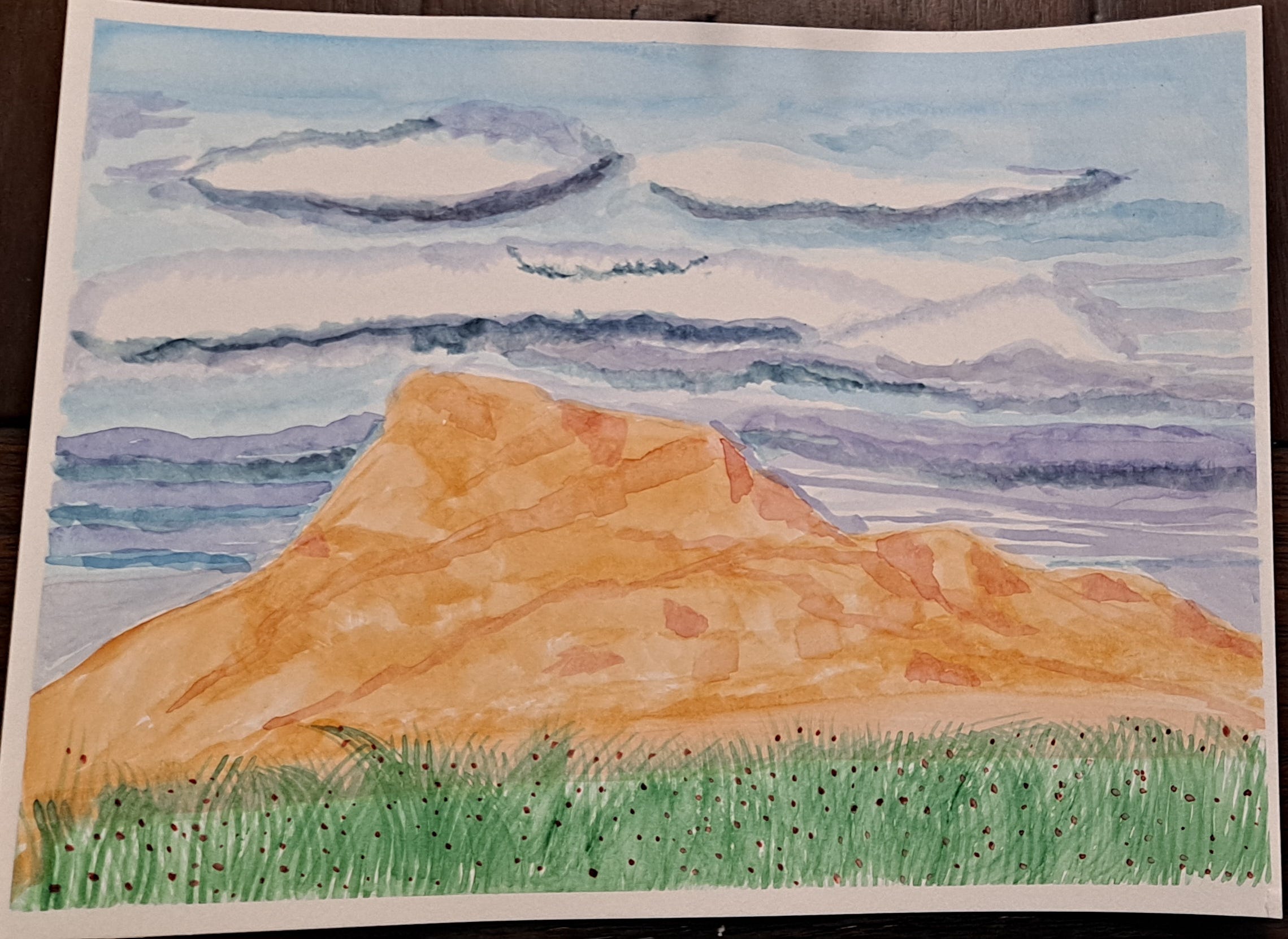
And, finally, I reworked last week’s watercolor Arizonascape. I believe I overworked the sky a bit, but the mountain has texture. It’s done:
To maximize the steadiness of my hands while painting, I purchased a leaning bridge on which to rest my wrist/arm. I love it. The leaning bridge is in the following photo:
Beautiful thoughts, here, Beth. The reminder about perfectionism is ever welcome.
Oh Beth, you know I love when you talk about your creative process. I feel the same way about my writing as you do with painting. When we fall into the art making it is time out of time--we are so immersed in the process of creating art that we are engaged in a whole new world. I love this particular passage: "I don’t suffer when I create; in fact, painting and sketching relieve my suffering. When I am anguished, I turn to art, and I find that the very act of creating alleviates stress. And despite making mistakes or struggling with certain aspects of a painting, I still feel joy, not frustration, because I am doing what fulfills me."-- think that's the alchemy that has occurred for me as well--I'm writing and of course editing, and yes there are 'mistakes" but it's all part of the learning process. I used to feel so defeated by my errors, now I just know that they will come along and I'll encounter them and hopefully catch them and learn from them. When you're engaged with your work it doesn't matter if you slip. I've learned to relax when creating an essay. I think of Barbra Streisand and her tangle with perfectionism. We know that she thinks of it not as a flaw, but as a relentless pursuit of excellence and truth in her art. But she's also in later years admitted that nothing is perfect, and that we can only open up to our talents and makes the best use of them, as we can! The important thing is doing what fulfills us and knowing that we are also serving our audience. I love your paintings and have a great affinity for the mountains--for some reason they call out to the little boy in me. Thank you Beth for always sharing your truth and your profound insights into the creative life