
The Blame Game
It’s bad enough to be ill, but blaming patients adds insult to injury.

Over the years and even quite recently, I have seen literature and videos by so-called “experts” asserting that one’s lifestyle and diet can prevent cancer. And that if one is unlucky enough to get cancer, it can be cured by changing one’s lifestyle regimen.
It is true that maintaining a healthy lifestyle is good for us. But it is also true that people diagnosed with cancer should not be guilted into feeling they are somehow to blame for getting the disease. This subtle, insidious blame game has run rampant in our culture for a long time. Unfortunately, too many people – healthy or otherwise – buy into a belief system that is fallacious and therefore harmful to our own sense of self-care.
Of course, some of the erroneous material is created by snakeoil salespeople who use fear to manipulate us into feeling guilty, so we can purchase “health products.” These manipulators tell us to exercise so many minutes per day, to steer clear of certain foods, and to drop 10 pounds here and there. Avoid this and avoid that. Do this and do that. And the yellow brick road to a cancer-free life awaits.
As a person diagnosed with breast cancer on the younger side, I had been lulled into complacency by the societal message that treating one’s body well guarantees a healthy life. There are no guarantees in life. Ever. All we can do is take the best possible care of ourselves today and appreciate our time on Earth.
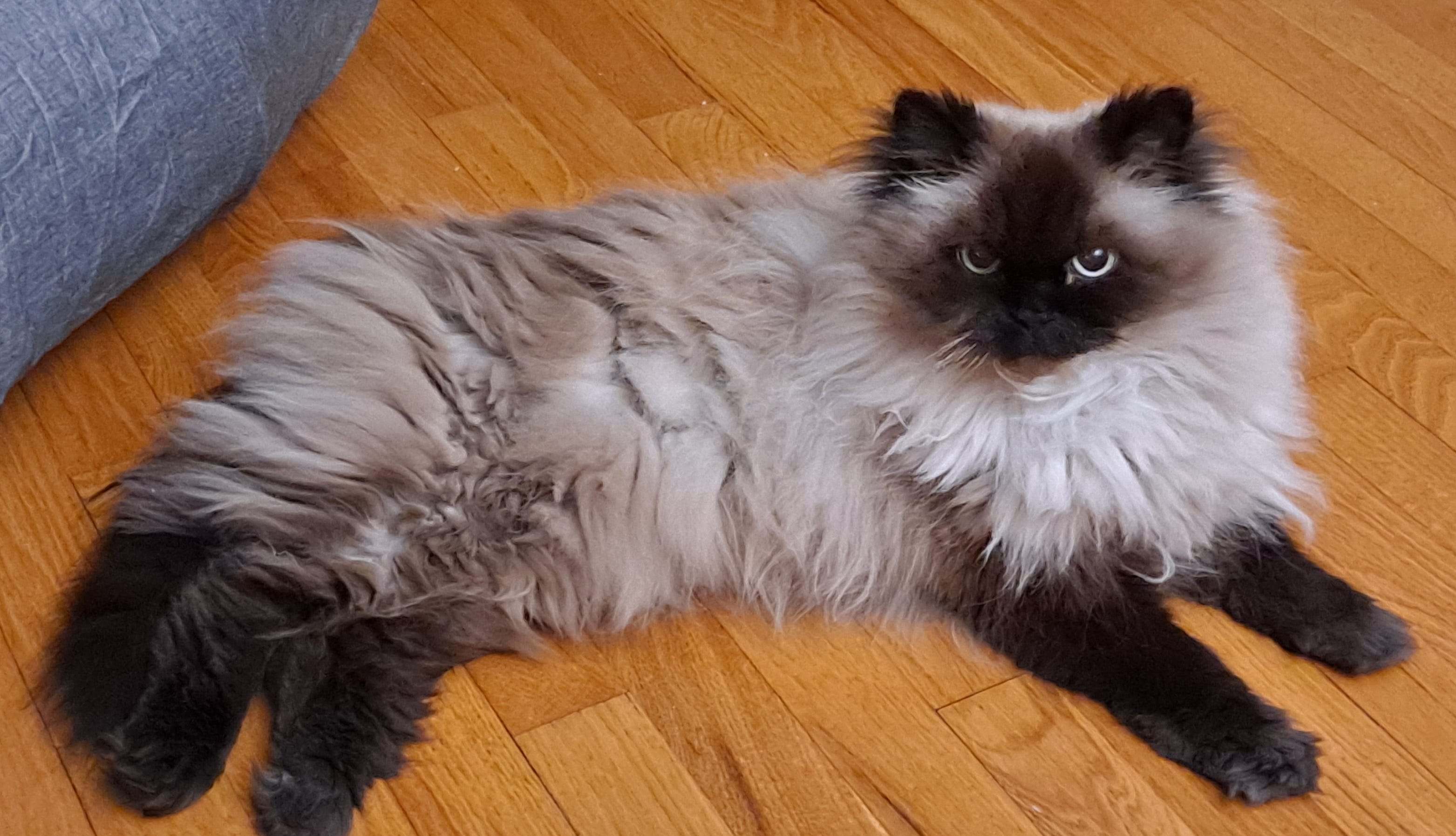
I appreciate friends and family (yes, Oliver is the spoiled family member).
Last week, I wrote about my self-care regimen including art. I am glad I have that beginner’s mindset, knowing I will never master techniques, but I will always learn from each drawing and painting I create.
This week I started a new oil painting and I am grateful I have so much to learn. Based on my recent visit to the Chicago Botanic Garden, I fell in love with a landscape setting that I felt compelled to paint. It’s going to be a really challenging one, I believe, and before I started, I gazed at the photograph feeling pretty intimidated.
So I just started setting down the sky, dark on top and lighter closer to the horizon. Then I filled in tree shapes, and mounds of greenery just to create a draft. The sky will contain ample clouds. Right now, this is all I’ve got:
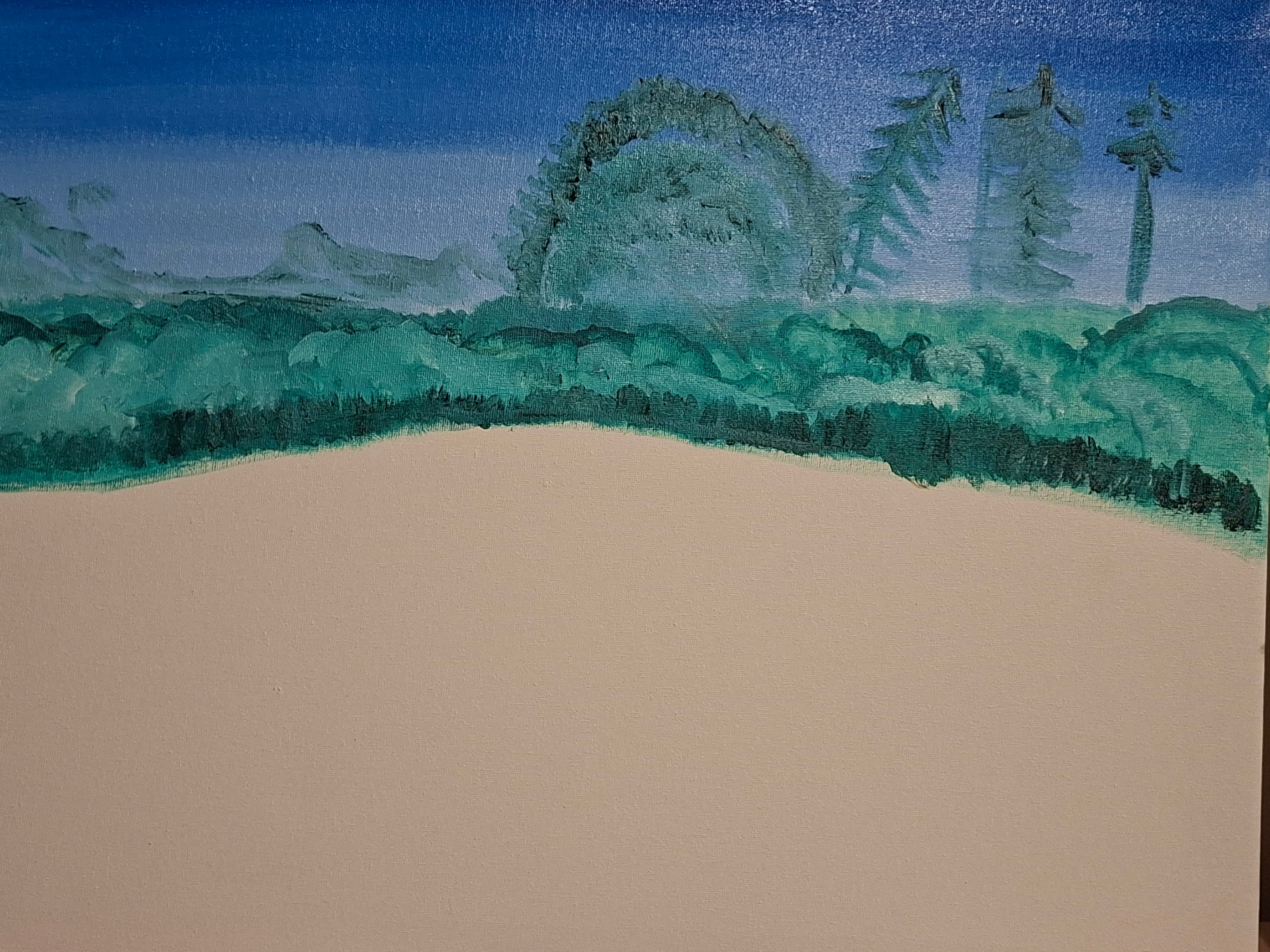
The white of the canvas will be a pond filled only with the reflections of the clouds and vegetation above. Therefore, I can’t do this portion of the canvas until the upper half is pretty much finished. I have never painted this way before, but I’m glad I have the opportunity to try it.
I want to be happy with the final result, but I can’t worry about this now. After all, it is the challenging process I’m after.
There is a faction of the health industry that adheres to the "diet and exercise" narrative as though anyone who was sick or injured brought it upon themselves. The first problem with that inference is that it's cruel. The second problem is that we humans carry thousands of years of DNA which dictates our body health, and lastly, we live in a polluted world that advances chemicals we don't know about and can wreck havoc on health -- so the "diet and exercise" mantra as a reason for disharmony in the body is not always accurate. I have eaten a good diet and regularly exercised, for decades, and guess what -- I got old anyway!
The health industry could use more of your art consciousness: beginner's mind, work-in-progress, no guarantees of outcome, and kindness above all else. Compassion for self-and others does a lot more good than the latest diet fad -- but mostly, I see, as do you, the greed of preying upon illness for the sake of profit.
Meanwhile, back at the canvas -- we've shared many times that art is salvation, and that holds true here as well. Journaling and creating stories has helped me through illness and injury, as well as the challenges of daily life. Making something, gives me a sense of connection to the something greater. Each week when I read your Substack, I'm reminded of the fact that there are no guarantees in life except to live each day fully with as much love as possible. I fall terribly short of this ideal, but continue to practice anyway, buoyed by the lens through which you see your art and the world.
Looking forward to experiencing how the sky reflects in the water of this new piece . . . You are in my heart dear Beth.
Beth, thank you for writing this. It made me think about how powerful our narratives around illness can be. We seem to have a deep need to explain suffering, and too often that explanation becomes blame—whether directed at ourselves or someone else. I like how your essay gently challenges that instinct and invites us to choose curiosity and self-compassion instead.