
Art Always Triumphs
Guarding our artistic endeavors is paramount. Let’s protect our craft and take joy in it.

“When life feels like it’s spinning out of control, or like the task you have in front of you is insurmountable, it’s easy to default to hopelessness … We need to train hopefulness.”
– Steve Magness, Do Hard Things
The world is witnessing harrowing times, when the physically powerful are trying to prove they are tough, thanks to brute strength and intimidation tactics.
But what makes a person tough is whether people can look to him or her for healing, peace, solace, compassion – and hopefulness. These are just some of the wonderful qualities I see in creatives. To use sheer physical force against someone weaker is easy, but what’s difficult, really much more difficult, is to devote one’s life to art, even within the backdrop of societal unrest.
Art and the artist can be destroyed. But the spirit in which art is made is immortal.
Some people are afraid to begin a creative project, while others can feel dread during the creative process. But all someone has to do is to show up to the page, stage, camera – or in my case – the canvas. Art should not be a receptacle for fear.
As Steve Magness says in his book Do Hard Things, “Confidence doesn’t come from doing the work out of fear or neuroticism – to practice because you are afraid to lose or fail. When fear drives the motivational ship, then insecurity pervades. When the work is done in the name of getting better, of enjoying the process, of searching for mastery of the craft, then confidence gradually grows.”
Although Magness is discussing athletic performance here, these words echo what I believe and live to be true: that in creating art, I am now able to shut down external and internal fears. What makes me tough is my desire to practice art just because I want to practice art, just because I want to improve. It’s that steadfast art practice that has given me a sense of peace.
And I took so much pleasure finishing the mountainscape, as seen here:
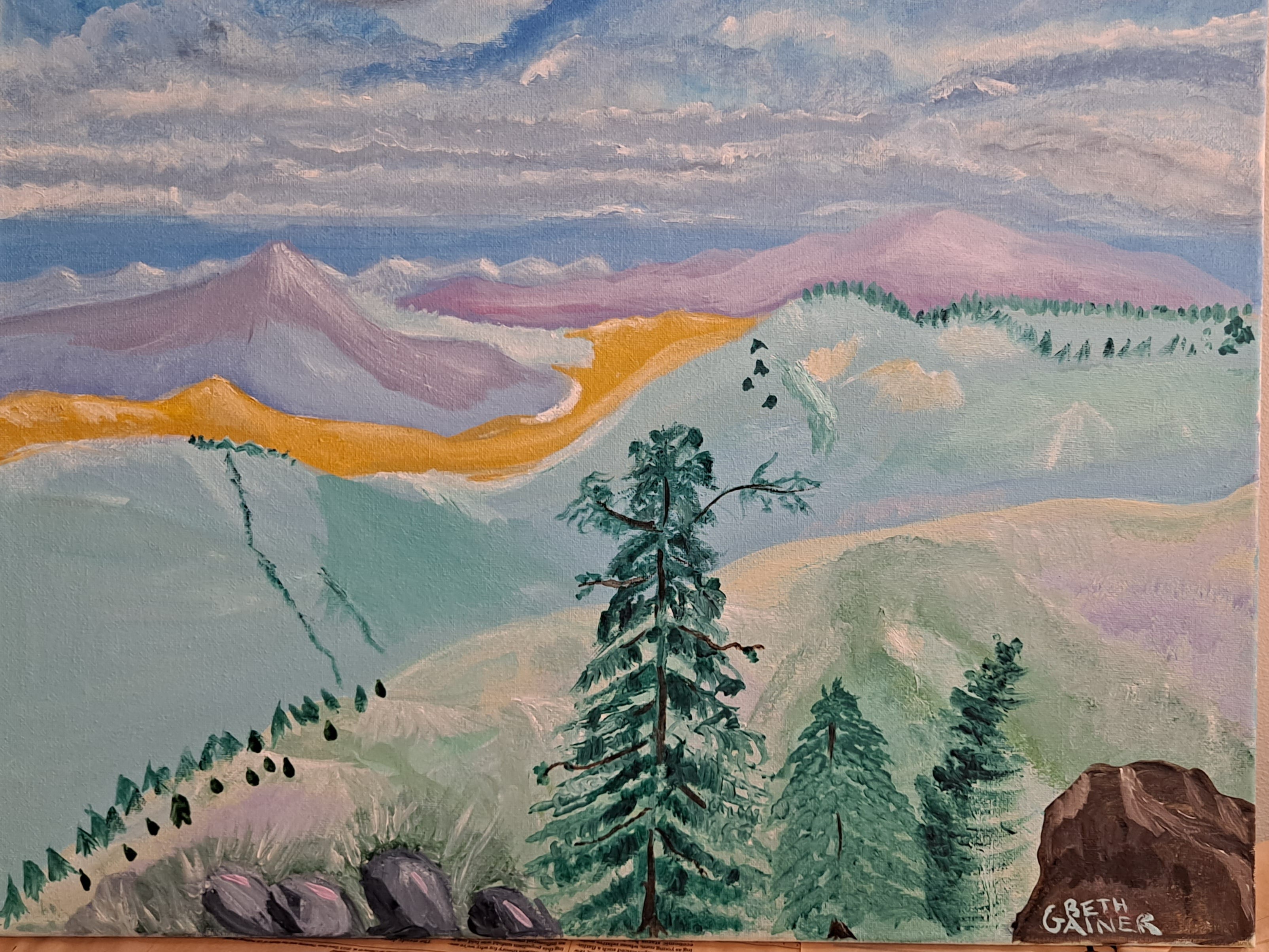
I worked a bit on the tallest tree that my daughter said looks like it’s doing the wave, and I added some other branches going outward and more green in the middle of the tree, where the densest foliage is, although I made sure the tree wasn’t too dense. Because it still looks like it’s doing some kind of wave, I titled this piece Waverly.
I decided to tackle another landscape, this one quite different from Waverly. The reference photo shows less than half of a bridge surrounded by a path and greenery in New York City. Architecture is not my greatest painting strength, so any hardscape structures have always intimidated me.
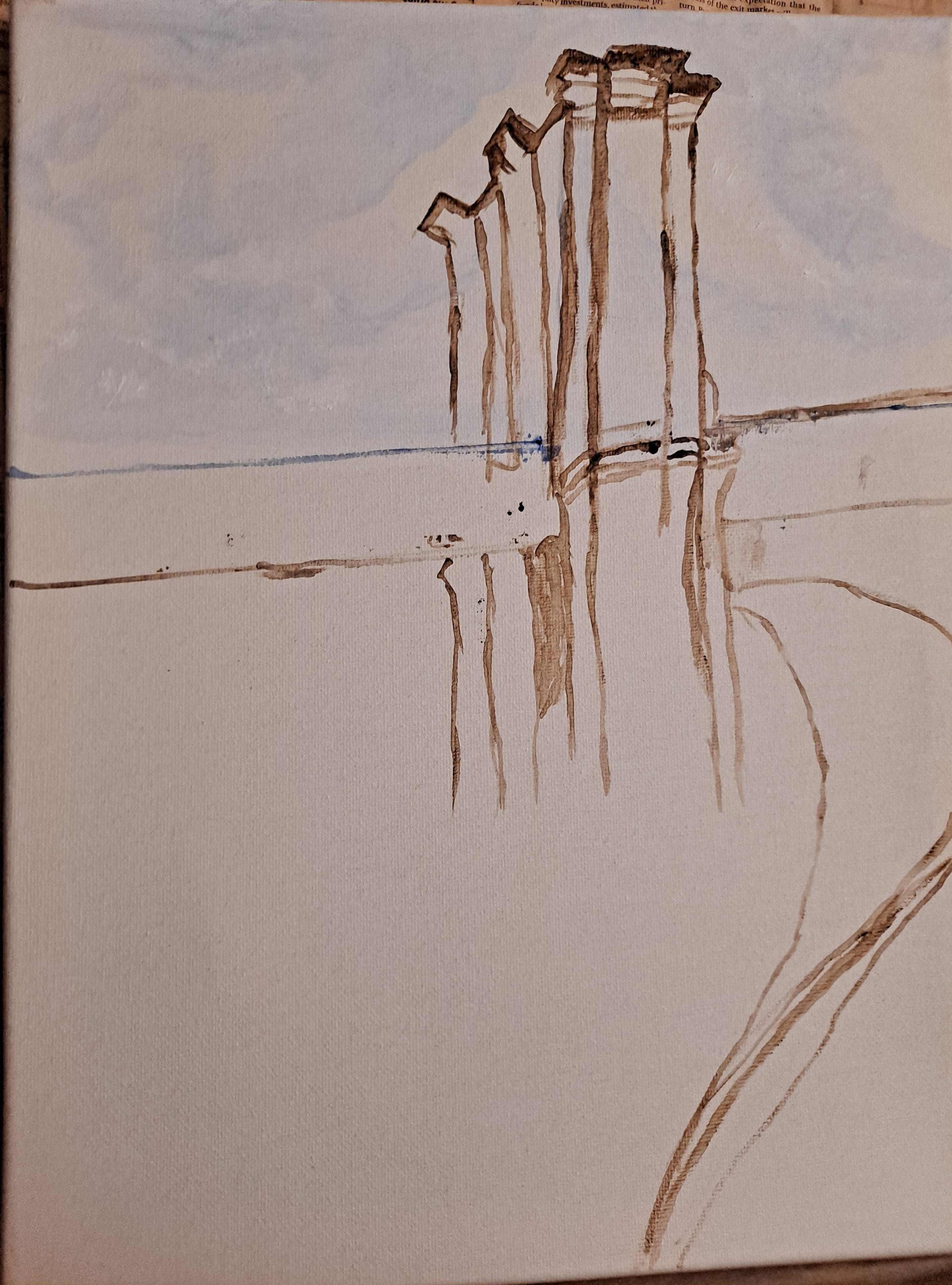
But I showed up to the canvas anyway and started this bridgescape with a drawing of the bridge:
Then I colored in part of the bridge and some sunrise or sunset hues:
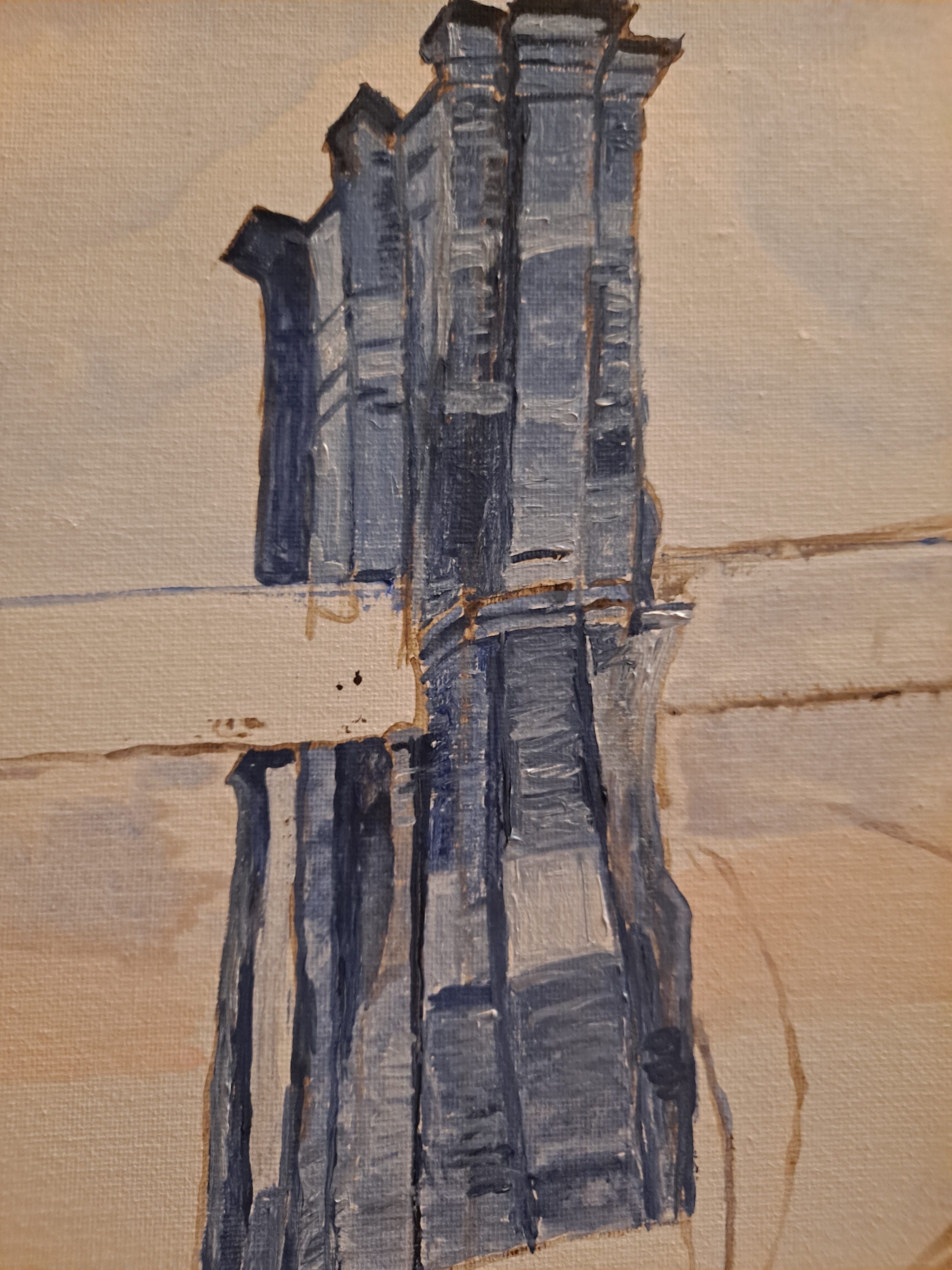
The sky is light, with hints of blue and white in very light brushstrokes, as I did not want a strong sky to compete with the strong blue-gray of the bridge. I used a ruler for both horizontal lines, as my fingers aren’t as steady as they used to be. About tools, artists have used tools since the beginning of time, so I don’t see anything wrong with it.
The bridge is fine; it widens toward the bottom and is slightly crooked, thus far. To the lower right corner, there will be a path, and the other blank part of the canvas will house greenery and color. The foliage, flowers, and maybe trees will cover a little of the bridge’s lower half.
As I drew each of the vertical lines (and even the horizontal ones with the ruler), and as I meticulously painted much of the bridge, I realized that you, dear reader, would never want me to design your homes, and I’m glad I didn’t become an engineer. I’m also glad all my design work is done on canvas.
I also realized I was smiling the whole time I was working on this bridgescape – not because I believed I was creating a beautiful piece of art, but because I was loving the process.
And this is why we want to guard our art practice, for the process itself is sacred.
I loved how you reframed ‘toughness’ as showing up with hope, care, and commitment to the process, especially in these truly challenging times. Thank you for this reminder that protecting our creative practice is both an act of courage and a form of peace.
Art soothes our souls. Beautiful landscape, Beth!